JAMHS AUTO
  • Home
  • Services
    • Extended Services
    • Regular Fluids Services
    • Fleet Services
  • Scheduled Maintenance
  • About
  • Specials
  • Contact Us
  • Blog
  • Videos

(386)447-6893

Directions

The importance of oil changes

5/3/2024

 
Picture
When you are driving, and you see that oil light you may be dreading bringing it into a shop to get it change. You might say "I can go a little while longer before getting it changed" then you forget about it and your engine is ruined. The oil in your car is one of the most important components to keeping your car "up and running". 
WHAT DOES ENGINE OIL DO?
To understand why we need to change our oil, first, we to understand exactly what your engine oil does. Every engine needs oil, but not just any oil. Every vehicle has its own standards and requirements when it comes to the type of oil you should be using. To put it simply, base oils are the backbone of the lubricant that ends up in your engine. They can be conventional, synthetic, a blend or high-mileage. Over time, your engine oil begins to wear out. This causes the oil to become increasingly less effective at lubricating your engine’s parts and absorbing heat.​
​ WHAT HAPPENS IF YOU DONT CHANGE YOUR OIL?
If you don't change your oil your engine oil begins to break down and wear out. If your oil continues to run through your engine unchanged, you’ll begin to face a list of problems.
If you wait too long for an oil change, your smooth and clean oil will turn into dirty sludge
As car a owner you should change your oil about every 5,000 miles so that your oil doesn't change to sludge and your car can still run smoothly. 
SIGNS OF BAD ENGINE OIL.
  • Check Engine or Oil Change Light
  • Engine Noise and Knocking
  • Dark, Dirty Oil
  • Oil Smell Inside the Car
  • Exhaust Smoke
  • Excessive Mileage
At JAMHS Auto we will change your oil and put in the best oil for your car in an affordable, quick and effective way. 


differential Maintenance

1/8/2024

 
Picture
The front purpose of the differential is to manage the rotation of your vehicle's wheels. In front-wheel drive (FWD) vehicles, the transmission connects directly to the differential. In contrast, the differential in rear-wheel drive (RWD) sits between the two rear wheels of the vehicle. All-wheel drive (AWD) and similar vehicles will contain both a front differential and a rear differential. The differential is important in making turns and driving on uneven terrain. It allows your wheels to turn at different speeds to prevent skidding of the tires. It also works to prevent loss of traction in soft or uneven terrain (such as dirt roads).

The Importance of Differential Fluid 

The differential fluid is usually referred to as differential oil or gear oil. The oil in your differential works to dissipate heat and lubricate the gears. Much like the engine oil, it will lose its ability to lubricate over time and requires regular service. Without healthy differential oil, the differential will rapidly overheat and wear down the gears.

Is it time to change?

If you've driven over 40,000 miles, it might be a good time to check the fluid. If you hear strange sounds from the differential, such as grinding or howling, it might be too late. At that point, the lack of lubrication has already damaged your gears. Another sign of bad differential oil is a burning smell. The oil will burn when it is no longer able to dissipate heat as it should. Check your vehicle's manual for a specific time interval. JAMHS Auto recommends a differential flush every 30,000 miles as part of your driveline service.

Clad Wheels and proper balancing

8/26/2021

 
Recently, a customer came in complaining of vibrations from the wheels while driving. They previously took their vehicle to a chain shop. The shop rotated and balanced the tires, but the customer was ultimately left unsatisfied as the issue promptly returned.  After a quick test drive at JAMHS Auto, the problem was obvious. The tires were not properly balanced. The cause of the tire imbalance was probably not due to any fault of the previous shop's technicians. The particular vehicle in question had cladded wheels. 

Cladded wheels are wheels that have aluminum rims that are coated with plastic, often chrome-colored. The plastic is relatively fragile and is easy to chip when balancing or changing tires.
​
PictureWheel mounted to balancer using precision flange plate
Clad wheels require special tools to balance. Generally, a tire balancer will use a cone-shaped mount along with a tapered collet. While these tools work for steel and non-cladded wheels, cladded wheels require a precision flange plate that only contacts the lug holes of the rim. Without the special tools, the tire balancer may show zero, indicating the tire is fully balanced. The pressure from cone mounts can also crack the plastic, leading to the replacement of the entire wheel. If a shop doesn't have the correct precision collets and flange plates, the wheel cannot be secured tightly enough on the balancer leading to inaccurate measurements.

 Here at JAMHS Auto we will make sure to do the job right the first time.

Don't Forget to Flush!

7/22/2021

 
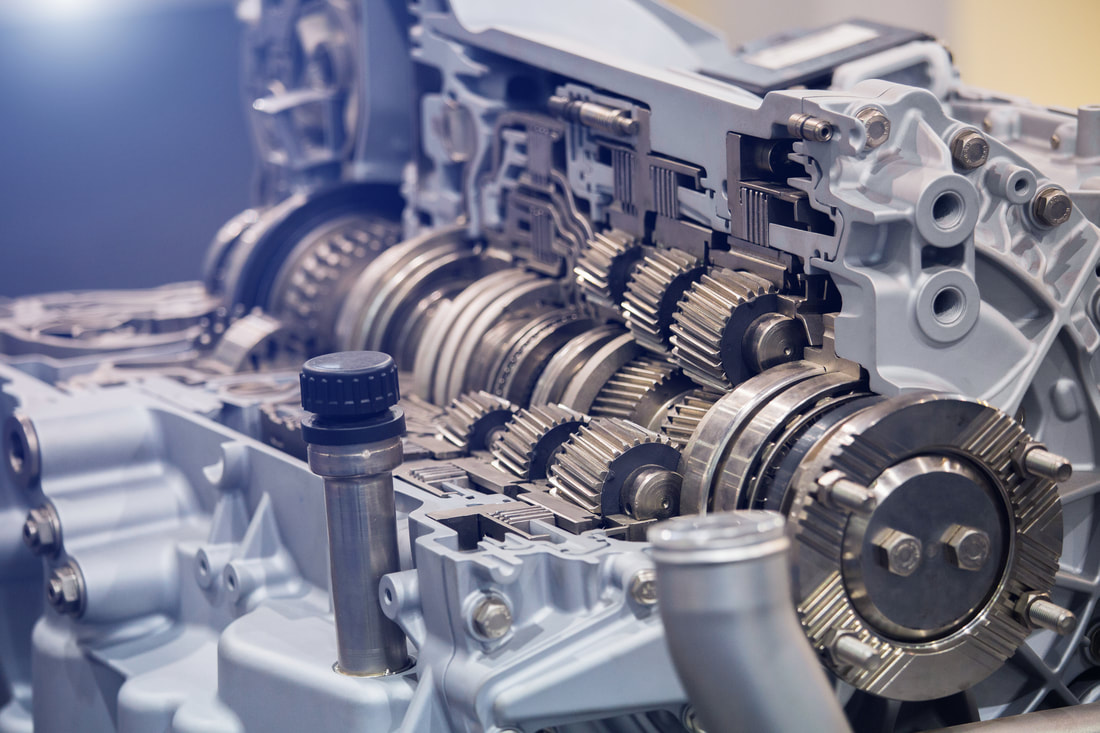
​Everyone learns as a young driver that they should change their oil to keep their engine healthy. One of the most vital components in your vehicle sits right next to the engine but gets no love! Servicing your transmission with a transmission flush is just as important
A rendering of a cutout transmission
Source: Scharfsinn/Shutterstock
as servicing your engine. Hobbyists and online forums will tell you that the only necessary service for your transmission is to drain and refill it, but a more involved approach is needed to keep you safe on the road. 

​There's a difference between a drain and refill of your transmission and a full flush. The drain and refill of your transmission pan only replaces as little as 20% of the fluid in your car's transmission, leaving you with dirty fluid. A full flush will involve using the machine to push out all of the old fluid, leaving you with fresh transmission fluid to minimize issues.

 As your vehicle's transmission ages, the gears will become worn, and this wear will cause some of the issues that might bring you to a shop: grinding or strange noises, problems with shifting gears, or gears slipping. Some older vehicles will have an issue when flushing their transmission for the first time. All the debris present due to a lack of maintenance gets dislodged, and your vehicle may initially underperform. A regularly performed transmission flush will prevent high-dollar repairs and extend the life of your vehicles. Transmission fluid is as important as the engine oil, and your repair shop should service it regularly. We here at JAMHS Auto recommend a transmission flush every 30,000 miles. Don't wait for transmission to give out before changing your fluid. 

Call us today to schedule your transmission flush. Regular maintenance prevents high-cost repairs!
Forward>>

    Archives

    April 2025
    March 2025
    July 2024
    May 2024
    January 2024
    August 2021
    July 2021

    Categories

    All

    RSS Feed

JAMHS Auto 
15 Hargrove ln, Unit 6G
Palm Coast, FL 32137
Phone
​(386) 447 - 6893
Email
[email protected]
  • Home
  • Services
    • Extended Services
    • Regular Fluids Services
    • Fleet Services
  • Scheduled Maintenance
  • About
  • Specials
  • Contact Us
  • Blog
  • Videos